Every employee becomes a brand touchpoint when they speak with a prospect, customer, candidate, partner, or stakeholder.
They explain the company, share presentations, send follow-ups, attend events, and exchange professional information. If those interactions use different messaging, outdated assets, incorrect titles, or inconsistent branding, customers notice.
Brand consistency across employees means ensuring that employees represent the same company identity, positioning, terminology, and customer promise while still communicating naturally in their roles.
The goal is not to make everyone sound the same. It is to make sure customers recognize the same company regardless of which employee they interact with.
This is the employee-level layer of the broader challenge of brand consistency across teams. The company-wide strategy defines standards and governance. Employee consistency determines whether those standards appear in everyday interactions.
Key Takeaways:
- Brand consistency starts with clear, usable employee messaging.
- Control brand-critical information without scripting employees.
- Standardize frequently shared employee and company information.
- Build brand updates into onboarding, role changes, and offboarding.
- Centralized management reduces errors, drift, and manual updates.
Where employee brand consistency breaks
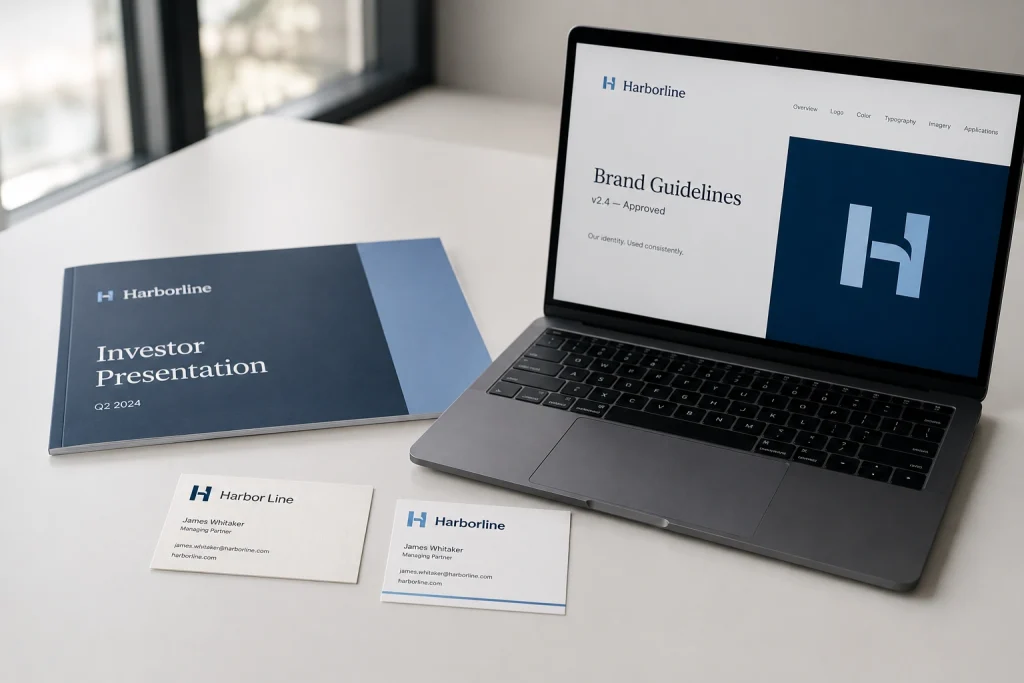
Brand inconsistency rarely starts because employees deliberately ignore company standards. It usually starts with friction.
A salesperson uses an old deck saved on their laptop. A recruiter writes their own company introduction. An employee changes roles but their business card still shows the previous title. Someone shares an outdated campaign link because the current one is difficult to find.
Each issue seems small. Together, they create brand drift.
Customers experience these inconsistencies as one company. If a prospect hears one product description, sees different terminology on an employee profile, and receives an outdated presentation afterward, the experience feels disconnected.
The practical question is therefore not whether employees have access to a brand guide. It is whether the organization makes it easy for them to represent the brand correctly.
Clear brand understanding matters at the employee level. Gallup found that employees who strongly agree they know what their organization stands for and what makes its brand different from competitors are 11.3 times more likely to feel connected to their organization’s culture.
7 tips to maintain brand consistency across employees
Brand consistency should create boundaries, not scripts.
Company-owned information should stay controlled: company and product names, logos, core positioning, approved claims, company descriptions, important URLs, CTAs, and other brand-critical information.
Employees should retain flexibility in how they communicate. A salesperson, recruiter, consultant, and executive may use different examples, tone, or emphasis based on the audience.
The delivery can change. The underlying company message should not.
Here’s how to maintain brand consistency across employees.
1. Give employees messaging they can actually use
Do not expect employees to translate a long positioning document into customer-facing language.
Give them clear answers to the questions they hear most often: What does the company do? Who does it help? What problem does it solve? What makes it different? Which claims are approved?
Provide formats suited to real situations, such as a one-sentence introduction for networking, a short explanation for a prospect conversation, and a more detailed version for qualified buyers.
Employees do not need scripts. They need a clear message structure they can adapt without changing the meaning.
2. Adapt messaging by role
Consistency does not mean every department communicates identically.
Sales may focus on customer problems, differentiation, and results. Recruiters may emphasize culture and opportunities. Customer success teams may discuss adoption and value. Executives may focus on strategy and credibility.
The emphasis changes, but company positioning, terminology, claims, and core messaging should remain aligned.
Short role-specific messaging guides are usually more practical than asking every employee to interpret one broad brand document.
3. Standardize frequently repeated information
Some of the most visible inconsistencies come from ordinary information employees share every day.
Job titles, company descriptions, product names, website links, meeting links, email signatures, digital business cards, presentations, proof points, and CTAs should not depend on memory.
If a product name changes, employees should not have to update it manually across multiple assets. If an employee is promoted, customers should not keep seeing the previous title for weeks.
The more frequently information appears externally, the easier it should be to manage and update.
4. Make approved assets easy to find
Employees often use outdated content because the approved version is harder to access than the old one.
If the latest presentation is buried in a folder, local copies will continue circulating. If the approved company description requires searching through a long brand guide, employees will write their own.
Put current assets where employees already work and make the approved option the easiest option.
This may include shared template libraries, approved email signatures, centrally managed employee profiles, digital business cards, campaign resources, and current sales materials.
5. Build consistency into the employee lifecycle
Employee identity changes over time.
People join, change roles, receive promotions, move departments, update contact information, and eventually leave. Each change can create outdated customer-facing information.
During onboarding, employees should receive approved external-facing resources before they start representing the company. That may include their title, company information, email signature, digital business card, meeting links, templates, and role-specific messaging.
Role changes should trigger the same process. Update relevant employee-facing assets systematically rather than relying on the employee to remember every location.
Offboarding should include reviewing or deactivating company-managed profiles, permissions, and identity assets.
Treat employee changes as brand operations, not only HR administration.
6. Give employees ready-to-use campaign resources
Brand consistency can break quickly when marketing launches a campaign and expects employees to decide how to share it.
Provide a simple campaign kit with the approved message, core talking points, destination URL, CTA, supporting creative, and campaign dates.
Employees can still add their own perspective. The offer, terminology, destination, and next step remain consistent.
This also improves measurement. When employees use approved campaign destinations instead of replacing them with generic links, marketing retains better visibility into engagement.
7. Create a clear process for exceptions
Approved resources will never cover every situation.
A salesperson may need industry-specific messaging. A regional team may need localized information. A recruiter may need material for a specialized hiring event.
Define what employees can adapt on their own and what requires review.
If the same exception appears repeatedly, turn it into an approved reusable resource. Repeated requests often signal a missing asset rather than an employee compliance problem.
Turn employee brand consistency into a managed system
Once the right messaging, assets, and processes are in place, the next step is making sure they stay current as employees, campaigns, and company information change.
That requires three things: reviewing what employees actually use, measuring how quickly inconsistencies are corrected, and centrally managing high-frequency brand touchpoints where possible.
Review the touchpoints employees actually use
Do not judge employee brand consistency by the corporate website or brand guidelines alone.
Review customer-facing touchpoints such as presentations, email signatures, employee profiles, digital business cards, proposals, follow-up resources, event materials, and campaign links.
Look for outdated titles, old product names, inconsistent terminology, retired claims, broken URLs, and unauthorized brand changes.
More importantly, look for patterns. If one employee uses an outdated company description, correct it. If dozens do, the problem is probably how updates are distributed or managed.
Fix the workflow rather than repeatedly correcting individual employees.
Measure how quickly changes reach employees
You do not need dozens of brand metrics. Focus on whether the system keeps employee-facing information current.
Track indicators such as:
- Adoption of current templates and profiles
- Number of outdated employee assets found
- Incorrect titles, URLs, product names, or claims
- Time required to update assets after a role change
- Speed at which company-wide changes reach employee touchpoints
A useful metric is time to consistency: how long it takes for a company or employee change to appear across relevant customer-facing assets.
The shorter that gap, the less your brand depends on manual updates and employee memory.
Manage employee identity centrally where possible
Employee identity is one of the hardest touchpoints to maintain manually because personal and company information constantly overlap.
Employees need their own names, titles, contact details, calendars, and role-specific resources. The company needs branding, approved company information, links, and other controlled elements to stay consistent.
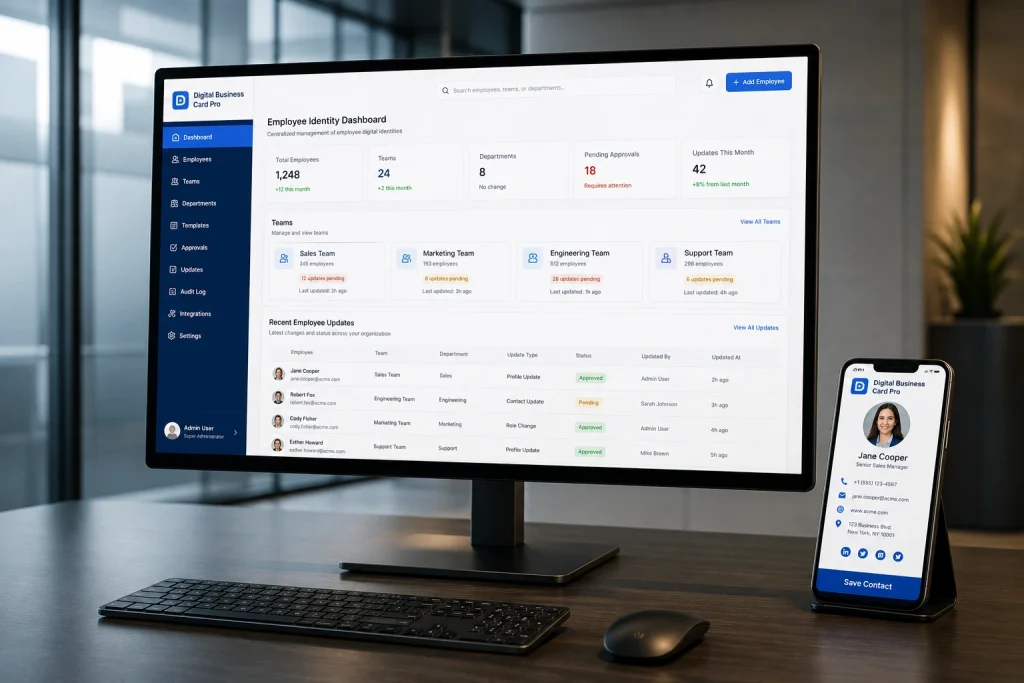
Digital Business Card Pro helps organizations manage this employee identity layer centrally.
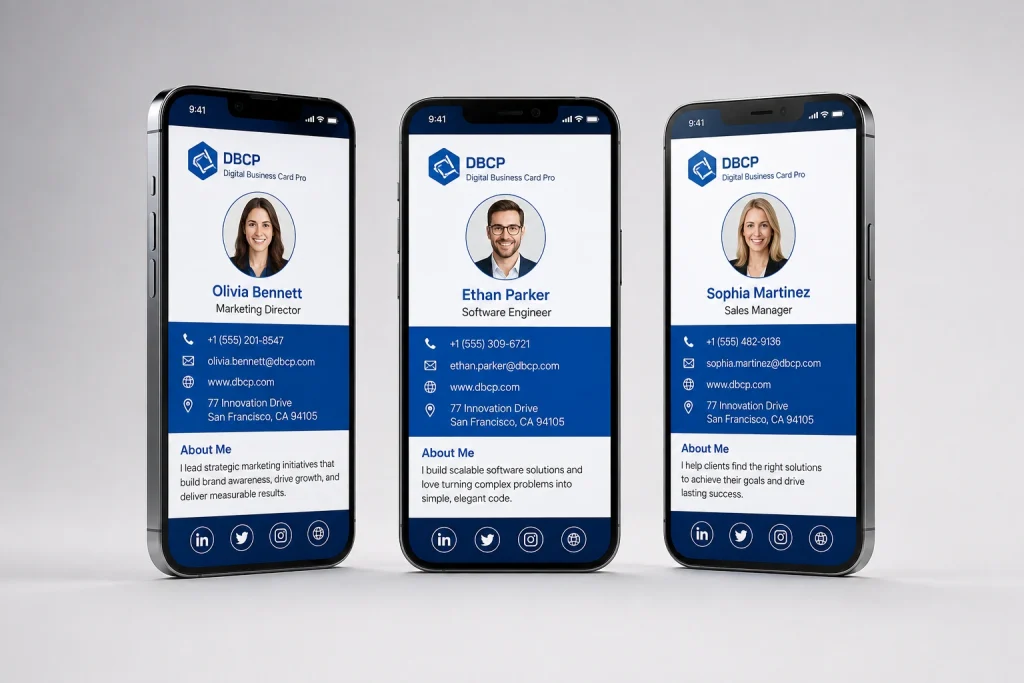
Companies can standardize digital business card templates, protect brand-critical fields, allow controlled employee edits, update information centrally, and deploy cards across teams. Directory-based workflows and centralized administration also reduce manual work as employees join, change roles, or leave.
This gives each team the control it needs:
- Marketing maintains brand standards.
- HR keeps employee information current.
- IT and administrators manage access and identity centrally.
- Employees get a practical, role-relevant profile they can share.
The goal is not to make every employee identical. It is to centrally control the company-owned layer while giving employees appropriate flexibility.
Final thoughts
Employees should bring their own expertise, personality, and communication style to customer interactions.
What should stay consistent is the company behind those conversations.
Give employees clear messaging, current information, approved resources, and defined boundaries. Standardize information they repeat frequently. Connect brand updates to onboarding and role changes. Make exceptions easy to handle. Then review the touchpoints customers actually receive.
The less employees have to guess, recreate, or manually update, the easier consistency becomes.
For the wider framework covering teams, governance, ownership, touchpoints, and measurement, read our guide to brand consistency across teams.
If employee contact sharing is one of the touchpoints you need to standardize, Digital Business Card Pro provides a centralized way to manage employee digital business cards while keeping company identity controlled and employee information current.
Frequently asked questions
What is employee brand consistency?
Employee brand consistency means ensuring employees represent the same company identity, positioning, terminology, information, and customer promise while still communicating naturally in their individual roles.
How do you maintain brand consistency across employees?
Define what must remain controlled, give employees role-specific messaging and current resources, standardize frequently repeated information, connect updates to the employee lifecycle, and review the customer-facing assets employees actually use.
How can employees stay on-brand without sounding scripted?
Standardize the core message rather than every sentence. Keep company positioning, terminology, claims, branding, and important information consistent while allowing employees to adapt their tone, examples, and emphasis.
Who is responsible for employee brand consistency?
Responsibility is shared. Marketing typically owns brand standards and messaging, HR manages employee information and lifecycle changes, IT or administrators manage relevant systems and access, managers reinforce usage, and employees use approved resources.
How do digital business cards support employee brand consistency?
Centrally managed digital business cards can keep company branding and brand-critical information consistent while allowing approved employee-specific content. Digital Business Card Pro helps organizations manage cards centrally, control editable information, and keep employee details current as teams change.
You may also like
Professional Email Signature Guide: What to Include and How to Create One
This guide discusses what a professional email signature is, what to include in it, how to create one, and how to use it with your digital card.
5 Best Event Lead Capture Tools in 2026
Event lead capture gets messy fast. Let’s look at the five best event lead capture tools, and how to choose the right one.
6 Best Digital Business Card Platforms for Teams in 2026
Compare the 6 best digital business card platforms for teams and find the right platform for your organization.
How Much Does a Digital Business Card Cost? (2026 Pricing Guide)
This guide helps you understand how much a digital business card costs and how much to invest based on your requirements.