Sounding transactional almost always comes down to one thing: leading with the ask instead of the relationship. The fix isn’t networking less or more carefully. It’s reordering what you say first, in the room, in a message, and in the follow-up that comes after.
This applies whether you’re a part of a team following up with contacts on behalf of a company or a solo professional building your own network. The mechanics are the same either way.
Let’s discuss how to network without sounding transactional.
Key Takeaways:
- Lead with the person, not the ask, in every opener.
- Specific, low-effort asks feel generous, not transactional.
- Always offer an easy no; it removes the pressure.
- Follow up within 48 hours, reference something specific.
- Silence-then-ask is what makes a pattern feel transactional.
- Why networking starts to feel transactional in the first place
- How to open a conversation without pitching first
- How to ask for something without it feeling like a request
- How to follow up without sounding like a check-in call
- Transactional phrasing vs. relationship phrasing
- Common mistakes that make networking feel transactional
- How this fits into your broader networking strategy
- Frequently asked questions
Why networking starts to feel transactional in the first place
Most advice on networking is about strategy: which events to attend, which platforms to use, how often to show up. That’s useful, and it’s worth treating as a system rather than a series of one-off events.
But strategy answers where to network. It doesn’t answer how to talk to someone once you’re there, and that’s usually where things go wrong.
Networking starts to feel transactional when a person becomes a means to an end before they’ve become a person.
It shows up in small ways: opening with what you want instead of who they are, treating every new contact as a potential lead, or reappearing only when you need something.
None of these require bad intentions. They’re just what happens when the pipeline mindset that works fine for planning a networking strategy leaks into the actual conversation.
The good news is that this is a phrasing and sequencing problem, which means it’s fixable without changing how often or where you network at all.
How to open a conversation without pitching first
The opener sets the tone for everything after it. If the first thing someone hears from you is what you’re offering, selling, or asking for, the conversation is transactional from the first sentence, no matter how it’s dressed up.
A better opener does two things: it’s specific to the person, and it gives something before it asks for anything.
Reference something real: “Great to meet you” or “I’d love to connect” could be sent to anyone. Pointing to something actual – a comment they made on a panel, a project you noticed on their site, a mutual contact you both trust – signals that you’re talking to them and not broadcasting to a list.
Give before you ask: That doesn’t have to mean a big gesture. It can be a relevant article, an introduction to someone else in your network, or a genuine, specific observation about their work. The point is that the first exchange has some value in it that isn’t about you.
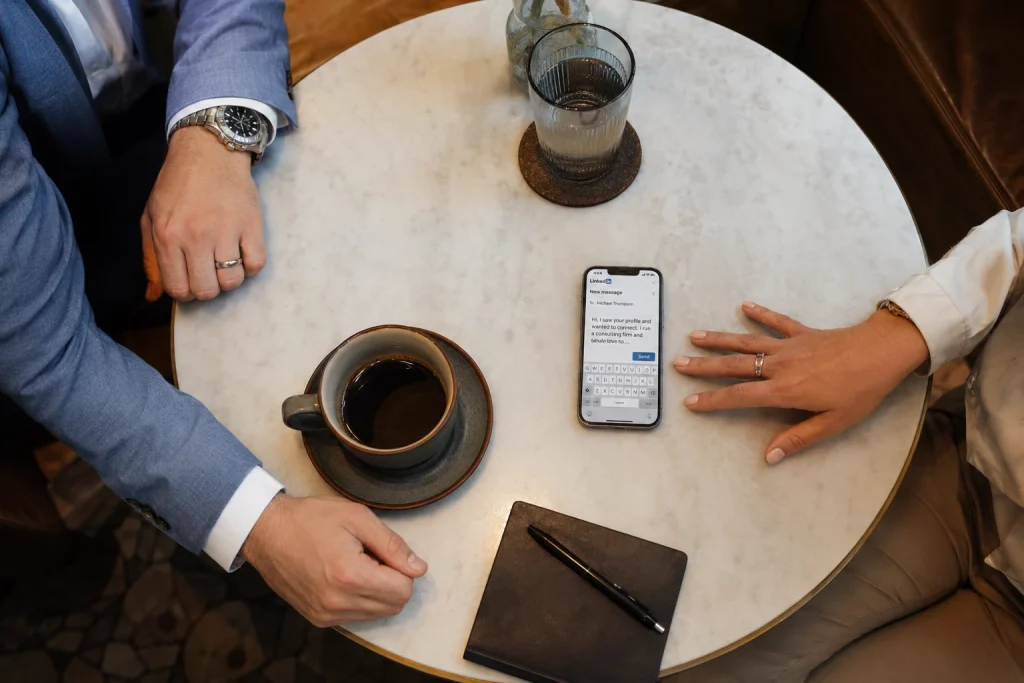
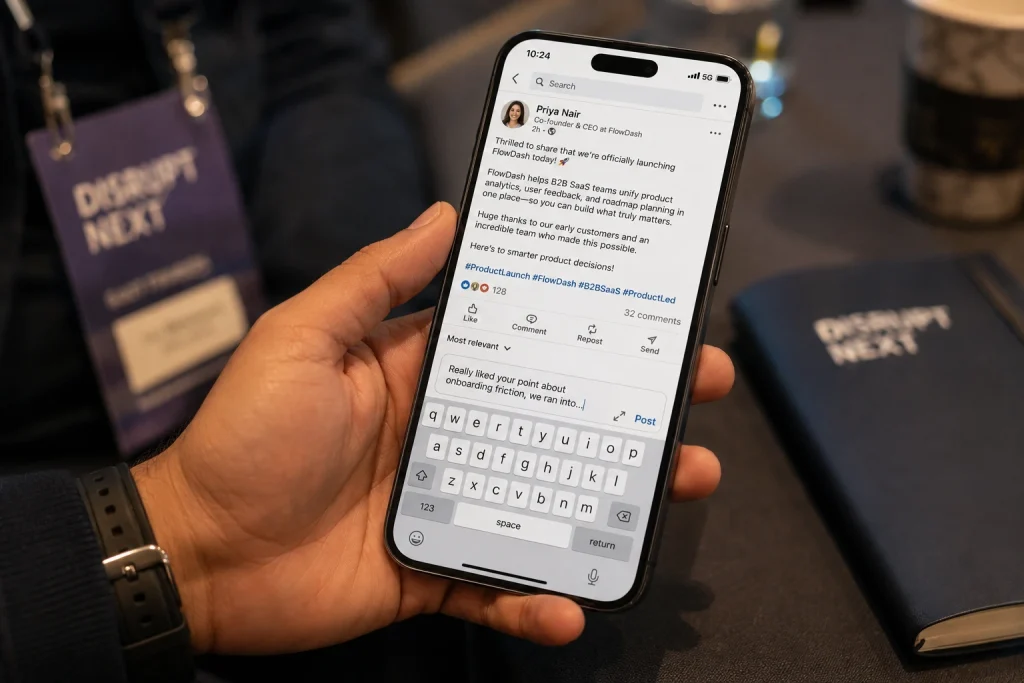
Before: “Hi, I saw your profile and wanted to connect. I run a consulting firm and would love to tell you about what we do.” After: “Hi, I read your post on [specific topic], and the point about [specific detail] matched something we ran into last quarter. Curious how you landed on that approach.”
The second version doesn’t ask for anything. It just starts a conversation, which is usually enough.
How to ask for something without it feeling like a request

Eventually, most networking relationships do involve an ask: an introduction, advice, a referral, a meeting. The ask itself isn’t the problem. A vague or effortful ask is.
A few things make the difference:
Be specific about what you want
“Someone in marketing” gets a worse response than “someone doing B2B demand generation at a Series A startup.” Specificity does the other person’s thinking for them, which is the opposite of transactional. It’s respectful of their time.
Make the ask low-effort
A forwarded email introduction is easy to say yes to. “Can you set up a call between us?” is a scheduling favor. The lower the effort required, the less it feels like a transaction and the more it feels like a small, natural thing to do.
Always offer an easy opt-out
Something as simple as “no worries if now isn’t a good time” removes the pressure that makes an ask feel transactional in the first place. Pressure is what makes something feel like a deal instead of a favor.
Common mistake: Vague asks like “I’d love to pick your brain sometime” actually read as more transactional, not less, because they put all the work of figuring out what you actually want onto the other person. Specific asks feel more generous, even though they’re asking for more.
How to follow up without sounding like a check-in call
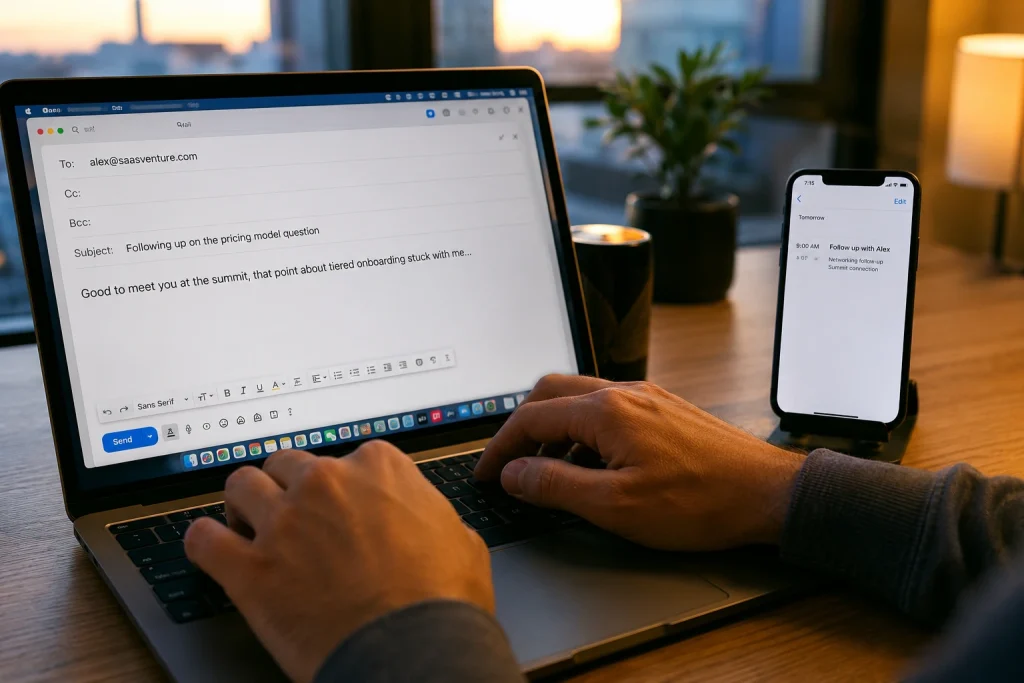
Most networking doesn’t fail at the first conversation. It fails at the follow-up, and the follow-up is where the transactional tone shows up most clearly, usually as a generic “great to meet you, let’s stay in touch” with nothing else.
A good follow-up does three things:
- It happens soon (within 48 hours is a reasonable target).
- It references something specific from the actual conversation.
- It leads with something other than an ask, if there’s an ask at all.
Fumbling for a paper card or asking someone to spell out their email while you both stand there turns a good conversation into an admin task right when it’s going well.
A digital business card removes that beat. Tap or scan, done, and the conversation ends the same way it started, like two people talking rather than two people doing a data exchange. That small thing matters more than it seems, because it’s often the last impression someone walks away with.
Transactional phrasing vs. relationship phrasing
| Situation | Sounds transactional | Sounds like a relationship |
|---|---|---|
| Cold LinkedIn message | “I’d love to connect and tell you about what we offer.” | “Read your post on [topic], curious how you got there.” |
| Asking for an introduction | “Can you connect me with someone in marketing?” | “Would you be open to a quick intro to [specific person], for [specific reason]? No worries if not.” |
| Post-event follow-up | “Great meeting you, let’s stay in touch.” | “Following up on what you said about [specific point], I ran into something similar last week.” |
| Asking for advice | “Can I pick your brain sometime?” | “I’m deciding between [option A] and [option B] for [specific situation]. Would value 15 minutes if you have it.” |
| Re-engaging an old contact | “Hey, it’s been a while, hope you’re doing well!” (followed by an ask) | “Saw [specific update about them], congrats. Been meaning to reach out.” |
Common mistakes that make networking feel transactional
Most of these aren’t about being insincere. They’re small habits that add up to the wrong impression.
- Pitching in the first message. Even a soft pitch, before any real conversation has happened, sets the tone as sales rather than relationship.
- Treating every contact as a lead. Not every conversation needs to go somewhere. Some of the most useful relationships start with no clear purpose at all.
- Only showing up when you need something. If the pattern of contact is silence followed by an ask, that pattern reads as transactional, regardless of how any single message is worded.
- Generic follow-ups. “Great to meet you” with nothing specific attached signals a template, not a person who was actually listening.
- Naming the exchange out loud. Phrases like “what can we do for each other” make the transaction explicit instead of just avoiding it. Most people would rather the value exchange stay implicit.
How this fits into your broader networking strategy
Tone is the layer underneath any networking strategy, not a separate one. The strategy gets you into the room or the inbox; how you handle yourself once you’re there determines whether the relationship goes anywhere.
The fundamentals of carrying yourself well in any networking context and of asking for a specific introduction are worth a closer look beyond what’s covered here. For the full range of channels and guidance on combining them into a plan, see the business networking strategy guide.
Most of what makes networking feel transactional happens in what you say. The one part worth fixing anyway: how someone saves your details once the conversation ends. DigitalBusinessCard.Pro makes it simple with brand-focused digital business cards that add to contact with a single tap.
Frequently asked questions
What does it mean to sound “transactional” when networking?
It means the other person can tell they’re being treated as a means to an end rather than as a person, usually because an ask, pitch, or request came before any real conversation did.
How do I ask for a favor or introduction without seeming self-serving?
Be specific about exactly what you’re asking for and why, make it as low-effort as possible for the other person, and give them an easy way to say no. Vague, high-effort asks feel more self-serving, not less.
Is it transactional to follow up with people you haven’t talked to in a while?
Not on its own. It becomes transactional if the message only shows up because you need something. Reference something specific and genuine before making any ask, or send it with no ask attached at all.
How do I network on LinkedIn without sounding like I’m selling something?
Comment and engage with what people actually post before messaging them directly, and when you do reach out, reference something specific from their content instead of opening with a connection request or a pitch.
What’s the difference between being strategic and being transactional?
Being strategic is choosing your channels and following through on purpose. Being transactional is how a specific conversation feels when the ask comes before the relationship. You can be highly strategic about where you network and still handle every individual conversation without it feeling like a deal.
You may also like
Professional Email Signature Guide: What to Include and How to Create One
This guide discusses what a professional email signature is, what to include in it, how to create one, and how to use it with your digital card.
5 Best Event Lead Capture Tools in 2026
Event lead capture gets messy fast. Let’s look at the five best event lead capture tools, and how to choose the right one.
6 Best Digital Business Card Platforms for Teams in 2026
Compare the 6 best digital business card platforms for teams and find the right platform for your organization.
How Much Does a Digital Business Card Cost? (2026 Pricing Guide)
This guide helps you understand how much a digital business card costs and how much to invest based on your requirements.